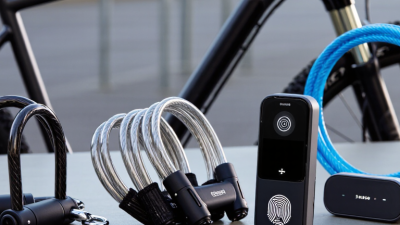
Choosing the best bike lock supplier in China requires more than comparing catalog prices. Global buyers need a manufacturer that understands security, durability, packaging, and export communication. A reliable supplier should explain material choices clearly, from hardened steel shackles to weather-resistant coatings. It should also provide practical samples before large production begins.
A buyer searching for “Bike Lock Bike Lock” may find many similar products online. However, appearance can be misleading. A strong sample should resist cutting, twisting, corrosion, and repeated daily use. Ask for test records, production photos, inspection procedures, and traceable material information. Independent quality checks can add confidence before shipment. Confirm whether the factory follows recognized quality systems, such as ISO 9001, rather than accepting unsupported claims.
Experienced sourcing teams also examine details that buyers often overlook. Check key smoothness, lock cylinder alignment, weld consistency, carton strength, and instruction language. A supplier should answer technical questions without hiding behind sales language. Communication matters when specifications change. So does after-sales support.
No supplier is perfect. A polished sample may not represent every production batch. This is where careful audits, pre-shipment inspections, and written specifications become valuable. Some suppliers may offer lower prices, but thinner materials or inconsistent plating can create higher return costs. The best partnership combines transparent pricing, stable manufacturing capacity, responsive service, and measurable quality controls. With realistic testing and ongoing review, global buyers can select a China-based bike lock supplier with greater confidence. Mistakes still happen, but they should be visible, documented, and corrected quickly.
China has become a leading source of bike locks because its manufacturing network is unusually complete. The China Bicycle Association reported approximately 57.6 million bicycle exports in 2023. That volume supports nearby suppliers for steel, cylinders, cables, coatings, packaging, and assembly. Global buyers can therefore compare several production options within one sourcing region.
In practical factory audits, the strongest suppliers usually show clear material records and repeatable testing. They measure shackle hardness, cable diameter, coating thickness, and key movement. Some also perform salt-spray testing, drop testing, and cycle testing on locking mechanisms. These details matter because a lock may look solid under showroom lights but corrode after weeks beside a wet road. Industry research from Grand View Research identifies security, portability, and durable materials as important factors in the expanding biCycle Lock market.
The picture is not flawless. A low quotation can hide thin steel, weak welds, inconsistent keys, or unclear inspection records. Buyers should request production samples, batch photographs, and independent test reports before placing larger orders. ISO-related quality systems can support reliability, but certification alone proves little about a finished lock. The phrase China Bike Lock Bike Lock may attract search traffic, yet real sourcing decisions require factory evidence, traceable specifications, and honest communication about defects. Small details often decide the result.
What Makes China a Leading Source of Bike Locks?
Chinese bike-lock manufacturers can access a broad industrial supply chain for stainless steel, hardened carbon steel, and boron alloy steel. These materials support different combinations of strength, corrosion resistance, weight, and cost, giving global buyers more options for customized lock designs and target markets.
Data shown as typical tensile-strength ranges for commonly used engineering materials; exact performance varies by grade, heat treatment, diameter, and manufacturing process.
A reliable bike lock supplier should provide evidence, not confident promises. In my sourcing experience, factory visits reveal more than polished catalogs. Check production records, incoming material inspections, and batch-level traceability. Ask to see how steel hardness, coating thickness, and key alignment are measured. Small details matter.
The ISO Survey 2023 shows the continued global use of ISO 9001 quality systems. However, certification does not guarantee consistent lock performance. Request the certificate’s scope, issuing body, and recent audit status. Then compare it with actual inspection reports. A certificate can still hide weak daily control. I would not trust paperwork alone.
Testing should match the intended market. Ask whether the lock follows relevant requirements such as EN 15496 or applicable national standards. Request test conditions, sample quantities, failure rates, and corrective actions. Useful tests include corrosion exposure, repeated locking cycles, tensile loading, and resistance against common cutting tools.
The World Bank Logistics Performance Index 2023 also highlights customs, infrastructure, and shipment reliability as key supply-chain factors. Therefore, review export experience, carton drop tests, lead times, and contingency plans. Visit the factory if possible. Watch one production shift.
Pricing needs careful interpretation. A very low quotation may indicate thinner steel, simpler cylinders, or unstable coating control. Yet higher pricing alone proves little. Compare material specifications, test coverage, warranty handling, and replacement procedures.
Leave room for doubt. Even a promising supplier can fail during peak season. Keep an approved sample, define acceptance limits, and inspect every shipment independently.
Which Types of Bike Locks Can Chinese Suppliers Provide?
Chinese bike lock suppliers can provide several designs for different riding environments. In my sourcing experience, cable locks are light and flexible for quick stops. Chain locks offer stronger coverage around thick posts. U-locks provide rigid protection and resist common cutting attempts. Folding locks balance portability with a larger locking range. Some suppliers also produce disc-brake locks for motorcycles and compact alarm locks for urban bicycles.
Materials vary by project. Suppliers may use hardened steel, zinc alloy, stainless steel, or weather-resistant coatings. Key cylinders can include standard, anti-pick, or customized systems. Combination locks are convenient, but some buyers underestimate password management. Smart locks may support Bluetooth functions, yet battery reliability needs careful testing. A supplier should provide samples, load tests, salt-spray results, and clear production records. Factory visits or independent inspections add useful confidence. Details matter.
Tips: Ask for a sample before placing a bulk order. Test the lock outdoors, not only on a clean showroom table. Check shackle thickness, key smoothness, coating quality, and rust resistance. Request packaging that prevents scratches during sea transport. I once trusted a polished sample too quickly; the mass finish felt weaker. That mistake was avoidable. Compare test results, production capacity, replacement parts, and communication speed before choosing a long-term supplier.
| Bike Lock Type | Main Construction | Typical Security Level | Best-Suited Applications | Locking Mechanism | Advantages | Limitations | Common OEM/ODM Options |
|---|---|---|---|---|---|---|---|
| U-Lock | Hardened steel shackle with a crossbar and protective coating | High | Urban commuting, bicycle racks, and fixed outdoor parking points | Key cylinder or resettable combination | Strong resistance to leverage attacks; compact and easy to carry | Limited locking circumference; may not fit wide frames or large parking posts | Shackle diameter, shackle length, coating color, key style, packaging, and logo placement |
| Heavy-Duty Chain Lock | Interlinked hardened steel chain covered by a textile or synthetic sleeve | High | Securing bicycles, e-bikes, motorcycles, and multiple bicycles to large objects | Key cylinder or combination head | Flexible length and strong resistance to cutting when using thick links | Heavier than cable locks; chain links may scratch surfaces without a protective sleeve | Chain diameter, length, sleeve material, sleeve color, lock head design, and packaging |
| Folding Lock | Connected hardened steel plates joined by rivets or protected hinges | High | Commuters who need a compact lock with more flexibility than a U-lock | Key cylinder or combination mechanism | Folds into a compact package; offers a larger locking range than many U-locks | Hinges and rivets require careful engineering; generally heavier than cable locks | Number and thickness of plates, folded size, carrying case, hinge covers, and surface finish |
| Steel Cable Lock | Stranded steel cable with PVC, vinyl, or silicone protective covering | Basic | Low-risk areas, accessory security, quick stops, and supplementary locking | Key cylinder or combination wheels | Lightweight, flexible, affordable, and available in many lengths | More vulnerable to cutting than hardened chain or U-lock designs | Cable diameter, length, coating, color, end fittings, combination wheels, and retail packaging |
| Armored Cable Lock | Steel cable protected by overlapping steel sleeves and an exterior cover | Medium | General commuting and situations requiring more flexibility than a rigid lock | Key cylinder or combination mechanism | More protective than a standard cable while retaining flexible handling | Usually heavier and less resistant to determined cutting than a high-quality U-lock or chain lock | Armor segment design, cable diameter, length, cover material, color, and lock head shape |
| Frame Lock | Fixed lock mounted on the bicycle frame near the rear wheel | Basic | Short stops and bicycles equipped with a compatible frame-mounting position | Key-operated sliding or rotating metal bar | Always attached to the bicycle; quick to engage and difficult to forget | Does not normally secure the bicycle to an immovable object without a plug-in chain or cable | Mounting spacing, bar length, key system, housing material, finish, and plug-in accessory compatibility |
| Disc Brake Lock | Compact hardened steel body with a locking pin that passes through a brake rotor | Medium | Bicycles or small electric vehicles with compatible disc brake rotors | Key cylinder or alarm-enabled locking mechanism | Small and portable; prevents wheel rotation when correctly installed | Does not attach the vehicle to a fixed object; compatibility depends on rotor holes and clearance | Pin diameter, body size, alarm function, battery compartment, finish, reminder cable, and packaging |
| Alarm Bike Lock | Cable, chain, U-lock, or disc-lock structure with an integrated vibration alarm | Medium | Visible locations where an audible deterrent can discourage tampering | Key, combination, remote control, or electronic activation | Combines physical restraint with an audible alert; useful for e-bikes and outdoor parking | Requires battery maintenance; the alarm is a deterrent rather than a substitute for strong metal construction | Alarm volume, sensitivity, battery type, waterproofing, activation method, LED indicators, and packaging |
| Combination Lock | Usually a cable, chain, or compact shackle with numbered rotating wheels | Basic | Users who prefer keyless access, family bicycles, rental fleets, and shared-use programs | Three-, four-, or five-digit resettable combination | No key management; convenient for multi-user applications | Security depends heavily on the cable, shackle, wheel design, and resistance to manipulation | Number of wheels, reset method, cable or shackle size, wheel color, instruction label, and packaging |
| Keyed Bike Lock | U-lock, chain, cable, folding, or frame-lock body with a mechanical key cylinder | Medium to High | Daily commuting, retail products, fleet use, and applications requiring controlled key access | Standard key, reversible key, or disc-style cylinder | Can provide stronger access control and avoids forgotten combinations | Users must manage and replace keys; key systems require consistent quality control | Key profile, keyed-alike or keyed-different options, cylinder cover, spare keys, and key numbering |
| Textile-Covered Chain Lock | Hardened steel chain enclosed in woven polyester, nylon, or similar fabric | High | Outdoor bicycle parking where frame and wheel protection are important | Key cylinder or combination head | Flexible, durable, and less likely to damage painted bicycle frames | Fabric can retain moisture if poorly designed; weight increases with chain thickness | Fabric weave, water-resistant treatment, sleeve color, reflective details, chain size, and lock head |
| Long-Reach U-Lock | U-lock structure with an extended shackle or larger internal locking area | High | Large-frame bicycles, locking through frames and wheels, and use with wider parking infrastructure | Key cylinder or combination mechanism | Greater reach than a compact U-lock while retaining a rigid shackle | Additional internal space may increase weight and can provide more room for leverage | Internal dimensions, shackle diameter, protective coating, crossbar design, mounting bracket, and packaging |
Choosing the best bike lock supplier in China requires more than comparing unit prices. Quality begins with a defined testing plan. Grand View Research’s 2024 bicycle lock market analysis estimates a market value above US$1 billion in 2023, with mid-single-digit growth expected through 2030. Growing demand increases the risk of inconsistent production.
Ask suppliers for test records against EN 15496, which covers cycle-lock requirements and test methods. Check tensile resistance, cutting resistance, key durability, and locking performance. For metal parts, request salt-spray results referencing ASTM B117 or ISO 9227. Inspect the actual samples, not only scanned certificates. Paper is not proof.
A reliable factory should explain its steel grade, coating thickness, cylinder design, and batch inspection process. Request production samples from different cartons. Test them outdoors after rain, dust, and repeated locking. A basic target could include 10,000 key cycles, although the supplier must define the test load and failure criteria clearly. The 2024 European Commission Safety Gate report recorded more than 4,000 product alerts across consumer categories, showing why traceability matters. It does not prove every lock is risky.
For an OEM Bike Lock Bike Lock project, verify incoming-material records, welding consistency, packaging protection, and corrective-action reports. I have seen attractive samples fail when mass production began. That weakness deserves attention. A second factory audit may cost more, but it can expose loose shackles, rough keyways, and missing inspection records before shipment.
Choosing the best bike lock supplier in China requires more than comparing the lowest quotation. Experienced buyers usually request a detailed price breakdown first. This should include lock materials, cylinder type, packaging, tooling, inspection, and shipping terms. A factory quote may look attractive until custom molds and printed cartons appear later. Ask for a pre-production sample. Test the key movement, coating, cable flexibility, and resistance to common weather conditions.
Minimum order quantities vary by product and customization level. Standard locks may start at a few hundred pieces, while customized colors or packaging can require higher volumes. For a Custom Bike Lock Bike Lock project, confirm whether the MOQ applies to each color, design, or total order. Some suppliers accept a smaller trial order with a higher unit price. That can protect cash flow, although the margin may be disappointing.
Customization can include logos, keys, locking mechanisms, mounting brackets, carton artwork, and instruction labels. Provide vector artwork and measurable specifications. Confirm logo placement on a physical sample, not only in a digital drawing. I have seen small alignment errors become expensive after mass production. Ask about sample charges, tooling ownership, lead time, replacement policy, and inspection records. Payment terms should be written clearly, with responsibilities for defects and delivery delays. Keep room for revision. The first specification is rarely perfect.
For global buyers searching “Wholesale Bike Lock Bike Lock,” shipping control begins before production. A reliable supplier should provide clear carton sizes, gross weight, loading quantity, and production timing. These details prevent expensive surprises at the port.
Ask for the correct customs classification before confirming the order. Check whether the lock contains batteries, electronic parts, or special coatings. Each feature may change documentation or transport requirements. Request commercial invoices, packing lists, certificates of origin, and test reports when required by the destination market. Product labels should match the documents exactly. Small errors can delay clearance.
Use a written shipping plan with agreed Incoterms, inspection points, and insurance responsibilities. Compare sea, rail, air, and courier options against delivery deadlines, not only freight prices. A pre-shipment inspection can verify key operation, cylinder quality, packaging strength, and carton markings. Photograph sealed cartons before loading. Keep these records.
I would also confirm the supplier’s export experience with your destination country. A low quotation may hide weak document control. That happened in one review I handled; the goods were ready, but the carton data was incomplete. We corrected it, yet the delay affected a retail launch. I still allow extra time for customs questions and seasonal port congestion. Local customs brokers or compliance specialists should review country-specific requirements, because rules and enforcement practices can change.
A long-term partnership starts with clear expectations, not friendly promises. Share drawings, lock dimensions, material requirements, packaging details, and target delivery dates. Ask the supplier to confirm each point in writing. A dependable factory should explain its production process, quality checks, testing equipment, and traceability methods. Request samples before mass production. Check the key movement, coating, cable strength, and package condition yourself.
Communication must continue after the first order. Share realistic forecasts, seasonal changes, and planned product updates. Discuss minimum order quantities and lead times early. Regular video inspections can reveal storage problems, loose components, or inconsistent finishing. Ask for inspection records and corrective actions when defects appear. Good suppliers do not hide problems. They explain causes and propose measurable solutions.
Tips: Use a written quality agreement. Approve a sealed reference sample. Set acceptable defect limits. Review delivery performance quarterly. Keep backup planning realistic. A perfect first order is not guaranteed. Buyers should also examine their own instructions. Vague specifications often create avoidable disputes. Respectful negotiation matters, but evidence matters more. Over time, shared data, fair payment practices, and honest feedback can build trust stronger than a single low quotation.
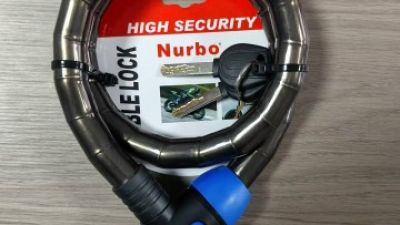
As urban mobility continues to expand, bicycles, motorcycles, and scooters are becoming practical choices for commuting and everyday travel. This growth also increases the need for convenient, reliable security solutions that can be carried and used in different environments. The SL2245 Joint Lock is designed for users who want a straightforward way to secure personal transportation equipment, helping protect it during short stops, outdoor activities, and daily parking.
With an 18 mm diameter and available lengths of 800 or 1000 mm, the lock provides flexible reach for securing bicycles, motorcycles, scooters, skateboards, and other equipment to suitable fixed objects. Its zinc alloy lock cylinder is paired with a brass key, while the ABS cover and protective PVC coating help reduce surface scratches, resist rust, and support long-term use. The sturdy yet portable construction makes it easy to carry in a bag or storage compartment. Beyond two-wheel vehicles, it can also be used with grills, ladders, doors, lawnmowers, and similar items. Custom colors and additional protective coating options are available for applications requiring a tailored appearance or extra surface protection.
Ask for test records covering tensile resistance, cutting resistance, key durability, and locking performance. EN 15496 is a useful reference. For metal parts, request salt-spray results under ASTM B117 or ISO 9227. Paper is not proof.
Examine physical samples from different cartons. Test key movement, locking force, coating quality, and cable flexibility. Try them after rain, dust, and repeated use. Certificates can hide production differences.
A practical target may be 10,000 key cycles. The supplier must define the test load and failure criteria. Otherwise, the number means little. That detail is easy to overlook.
Request the steel grade, coating thickness, cylinder design, and batch inspection process. Check welding consistency and incoming-material records. Review corrective-action reports for earlier defects. Loose shackles deserve attention.
Standard locks may require a few hundred pieces. Custom colors or packaging can require more. Confirm whether the minimum applies to each color, design, or the total order. A small trial order may cost more per unit.
Customization may include keys, mechanisms, brackets, cartons, and instruction labels. Provide vector artwork and measurable specifications. Approve a physical sample before mass production. Small alignment errors become expensive later.
Ask for commercial invoices, packing lists, certificates of origin, and required test reports. Carton labels must match the documents exactly. Check carton sizes, gross weight, loading quantity, and production timing. Small errors can delay clearance.
Write down Incoterms, inspection points, insurance duties, and delivery deadlines. Confirm whether batteries, electronics, or special coatings affect transport requirements. Photograph sealed cartons before loading. Leave extra time for customs questions and port congestion.
China has become a leading source of bike locks because of its strong manufacturing capabilities, broad product range, competitive pricing, and flexible production capacity. Global buyers can find cable locks, chain locks, U-locks, folding locks, disc-brake locks, and smart or combination models. To select a reliable supplier, buyers should review factory experience, production equipment, quality-control procedures, certifications, samples, communication, and export performance. The keyword Bike Lock Bike Lock can also be used strategically when organizing product information for international customers.
Before placing an order, buyers should confirm material strength, corrosion resistance, locking performance, packaging, and relevant quality standards. Pricing usually depends on design, materials, order quantity, customization, and packaging, while minimum order quantities should be agreed in writing. Efficient shipping requires clear product documents, accurate labeling, suitable packaging, and compliance with destination-market requirements. Long-term partnerships are built through transparent communication, consistent inspections, realistic delivery schedules, fair negotiations, and regular product improvement.